Pulushkin
Dead SoulsPlushkin is a landowner of immense resources whose appearance and self-presentation suggest destitution. When Chichikov meets him, Plushkin claims that fever has killed many of his serfs and that roughly seventy others have fled; Chichikov offers to assume the tax obligations attached to the dead. The encounter makes Plushkin’s defining contradiction concrete: he possesses wealth on a large scale, yet speaks and looks as though he is reduced to want, while the people in his charge suffer deprivation.
Identity and First Impression
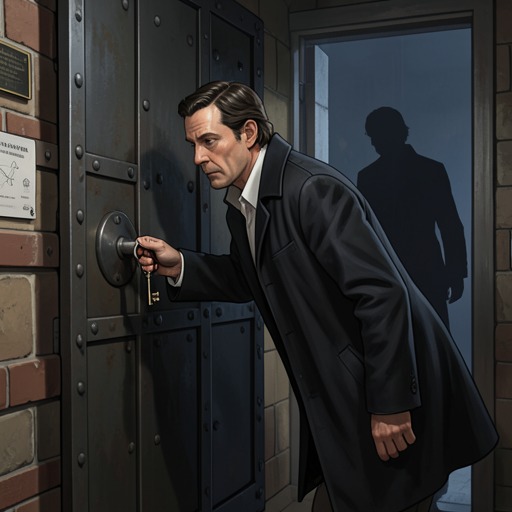
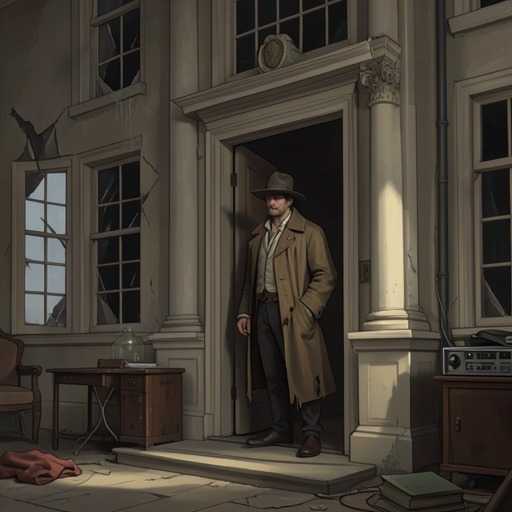
Chichikov initially mistakes Plushkin for a beggar. The old man’s coat is so ragged and filthy that its material is unrecognizable; four tails hang from it instead of the usual two, with a torn newspaper protruding from them. Around his neck is a strip of cloth that might be a stocking, garter, or stomacher, but is certainly not a tie. His projected chin forces him to wipe away dribble when he speaks, while his small eyes still glitter beneath heavy brows. The details make his clothing less a sign of ordinary poverty than an unsettling disguise for his actual position.
That position becomes clear when Plushkin says, “I am the master.” Chichikov starts and stares: the figure before him is not a mendicant but a landowner with more than a thousand serfs, abundant stores of flour and grain, and storehouses filled with homespun cloth and linen, as well as tanned and untanned sheepskins. The gap between visible squalor and extensive property is the scene’s central reversal. Chichikov acknowledges that he would have given a beggar alms, but now stands before a proprietor whose apparent misery cannot be explained by a lack of possessions.
Claims of Ruin and the Estate
Plushkin describes his estate as short of fodder. He says his lands are small and blames the peasantry as lazy and drawn to the tavern, then imagines that he may have to spend his old age wandering the world. Chichikov counters with the report that Plushkin has over a thousand serfs. Plushkin rejects the figure, suggesting that whoever supplied it meant to make a fool of Chichikov, and argues that the taxes on so many people would leave little over. He says that, for three years, a fever has been killing his serfs wholesale.
The exchange places material abundance beside a rhetoric of deprivation. Plushkin has stores and goods on a substantial scale, yet presents himself as burdened by taxes and dwindling resources. His explanation for the shortage of fodder shifts blame onto the peasants, while his account of fever reveals that deaths among them have become a financial concern as well as a human loss. The evidence does not resolve how much of his reported ruin is genuine, but it shows how readily he frames his holdings through scarcity and expense.
Chichikov’s Offer
Chichikov responds to the deaths with conspicuous interest. Plushkin takes offence at what seems almost a joyful exclamation, and Chichikov hastens to sigh and express sympathy. Plushkin dismisses sympathy as useless to the purse, citing a military captain who calls him dear uncle, kisses his hand, and professes compassion while having squandered his money among fellow officers and on an actress. In Plushkin’s account, sympathetic words are an empty performance that costs the speaker nothing.
Chichikov distinguishes his own response by offering action rather than condolence: he will take over the taxes due on serfs who have died. The proposal astonishes Plushkin, who stares open-mouthed before asking whether Chichikov has served in the military. Chichikov replies that he has instead belonged to the civil service. The exchange establishes the practical meaning of his sympathy: it is a financial offer that can also advance his own dealings in the names of deceased serfs. For Plushkin, whose account of the dead has emphasized the tax burden, the offer directly addresses the problem he has named.
Fugitive Serfs and Narrative Significance
The transaction’s field widens when Chichikov asks whether Plushkin also has runaways. Plushkin confirms that he does. His son-in-law has filed the necessary information, but says the fugitives’ tracks have grown cold; Plushkin disparages the son-in-law’s ability to present a case in court, calling attention to the gap between military service and legal skill. Asked for a number, he estimates that about seventy serfs have fled. Chichikov, already interested in the report of mass deaths, responds with disbelief.
The dead and the fugitives are distinct groups, but both enter the conversation through counting, registration, taxes, and legal procedure. Plushkin’s dead serfs remain relevant as taxable persons, while the runaways are described through a filed report and the difficulty of locating them. Chichikov’s attention turns these absences into prospective assets. The episode sharpens the novel’s satire of a system in which human lives can persist on paper after death or disappearance, while Plushkin’s grotesque exterior and vast stores embody a different, equally troubling mismatch between possession and use. His encounter with Chichikov is defined not by a simple exchange of sympathy, but by the conversion of loss into a calculation.